Building a National Vision for the Conservation of Migratory Birds and Sustainable Hunting Management
Every year, millions of migratory birds cross Egypt along one of the world's most important migration flyways, making the country a global stronghold for bird conservation. Protecting these species requires more than effective legislation—it demands science, collaboration, community engagement, and a shared national vision.
Recognizing the growing challenges posed by unsustainable bird hunting and illegal wildlife trade, Nature Conservation Egypt (NCE) convened a two-day National Expert Workshop entitled "Strengthening Bird Hunting Governance in Egypt: Lessons Learned, Challenges, and Opportunities for Joint Action."
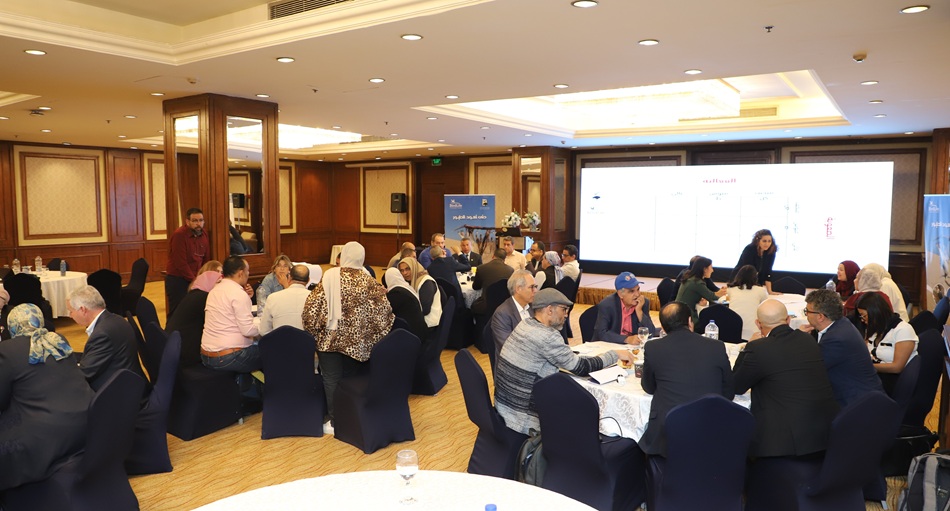
Held in Cairo on 10–11 May 2026, the workshop brought together an unprecedented range of stakeholders to develop a more coordinated and effective national approach to bird hunting governance, while balancing biodiversity conservation with the social and economic realities of local communities.
A National Platform for Dialogue
The workshop assembled representatives from government ministries, environmental authorities, Parliament, religious institutions, universities, research centers, civil society organizations, hunting associations, media professionals, and international conservation partners.
This broad participation reflected a shared understanding that addressing unsustainable bird hunting requires cooperation across sectors and disciplines. By bringing together decision-makers, researchers, conservation practitioners, community representatives, and opinion leaders, the workshop created a unique platform for constructive dialogue and collective problem-solving.
Understanding the Challenge
The first day focused on building a comprehensive picture of bird hunting in Egypt and the complex challenges surrounding its management.
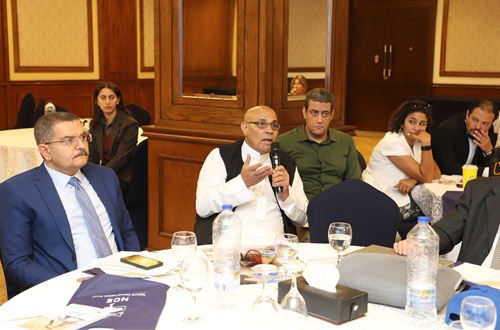
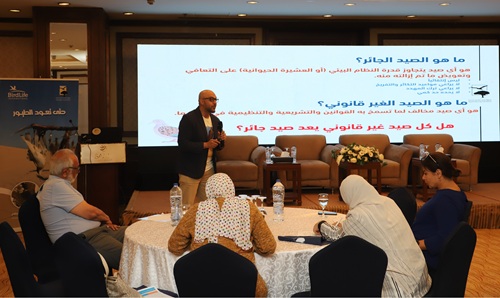
Participants reviewed the current status of migratory bird hunting across different regions of Egypt, examined illegal hunting practices and emerging threats, and discussed the environmental impacts on globally threatened species using one of the world's most important migration routes.
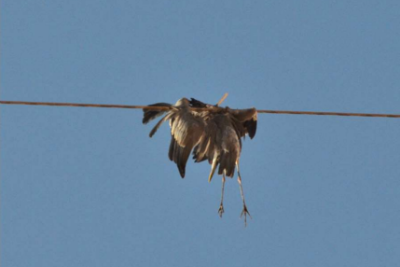
Discussions highlighted that unsustainable bird hunting is no longer solely an environmental concern. It has evolved into a complex issue shaped by intertwined ecological, legal, economic, social, and cultural factors. Participants examined the expansion of illegal hunting methods, the increasing use of electronic calling devices and extensive mist-net systems, wildlife trafficking, and the growing influence of online markets and social media in promoting illegal hunting activities.
The workshop also explored the challenges facing law enforcement, scientific monitoring, data availability, and policy implementation, emphasizing the importance of adopting a comprehensive approach that combines effective legislation with public awareness, sustainable livelihoods, and stronger institutional coordination.
 |
 |
|
 |
 |
Conservation Through Shared Values
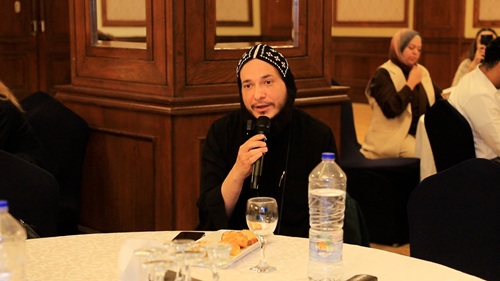
Recognizing that biodiversity conservation extends beyond science and policy, the workshop welcomed active participation from representatives of both Al-Azhar and the Egyptian Church.
Their contributions highlighted the ethical and religious responsibility of protecting nature, promoting compassion toward wildlife, and ensuring the sustainable use of natural resources for future generations.
The discussions demonstrated the important role that religious institutions can play in encouraging positive behavioural change and strengthening environmental awareness throughout society.
From Challenges to Solutions
Building on the discussions of the first day, the workshop shifted its focus toward developing practical and achievable solutions.
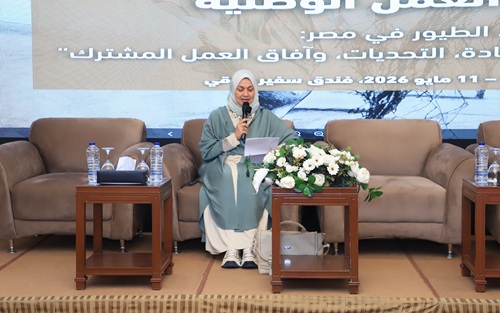
Experts presented successful international experiences in sustainable hunting management, demonstrating how scientific monitoring, adaptive management, spatial planning, effective legislation, and community participation have contributed to improving conservation outcomes in other countries.
Participants also explored the ecological and economic value of birds, highlighting their essential role in maintaining healthy ecosystems, supporting agriculture through natural pest control, enhancing biodiversity, and contributing to the rapidly growing nature tourism sector worldwide.
These discussions reinforced the understanding that protecting migratory birds represents not only an environmental obligation but also an investment in ecosystem resilience and sustainable economic development.
 |
  |
Developing Practical Recommendations
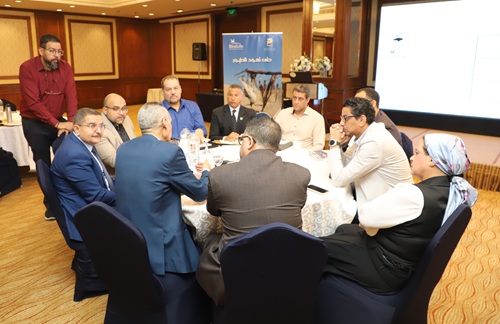
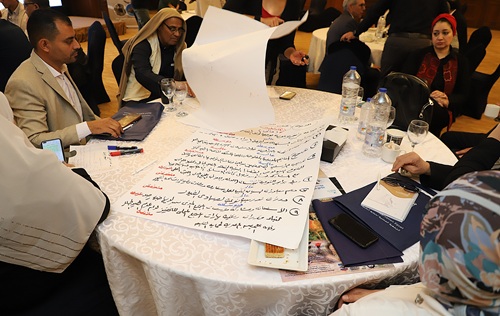
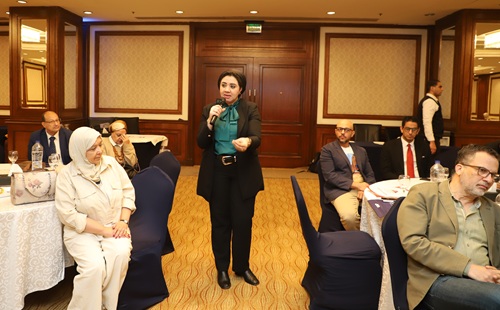
To translate discussions into action, participants worked within specialized thematic groups focusing on the key pillars of future bird hunting governance in Egypt.
The working groups addressed:
Each group developed practical recommendations aimed at strengthening governance while recognising the needs of local communities and supporting long-term conservation objectives.
Launch of the National Voluntary Working Group
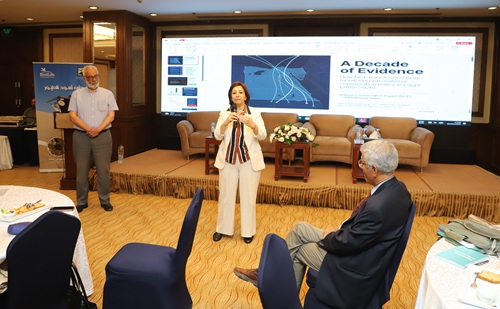
One of the workshop's most significant achievements was the official launch of the National Voluntary Working Group on Combating Unsustainable Bird Hunting.
Designed as an open coordination platform, the group brings together experts, government institutions, researchers, civil society organizations, media professionals, and individuals committed to supporting migratory bird conservation in Egypt.
Participants also reviewed the proposed governance structure of the initiative, coordination mechanisms between thematic working groups, and future communication channels to ensure that the workshop's recommendations evolve into concrete conservation actions.
 |
 |
Towards Egypt's National Roadmap (2026–2030)
The workshop concluded with the presentation of the initial framework for Egypt's National Roadmap for Combating Unsustainable Bird Hunting (2026–2030).
The roadmap establishes a long-term vision centered on five strategic priorities:
Participants agreed that successful implementation will require sustained collaboration between government agencies, civil society organisations, academic institutions, religious leaders, local communities, and international partners.
A Shared Vision for the Future
The workshop reaffirmed that effectively addressing unsustainable bird hunting requires an integrated, long-term approach that extends far beyond enforcement alone.
Future success depends on combining science-based decision-making, effective legislation, public awareness, community participation, sustainable financing, and strong institutional partnerships into a coordinated national framework.
The establishment of the National Voluntary Working Group and the development of the National Roadmap (2026–2030) represent important milestones toward achieving this vision. Together, they lay the foundation for a more collaborative and effective approach to conserving migratory birds, strengthening biodiversity governance, and fulfilling Egypt's national and international conservation commitments.
Stay updated with the latest news, trends, and offers by subscribing to our newsletter. Don't miss out on exclusive content and special promotions - sign up today!

.png)