.jpeg)
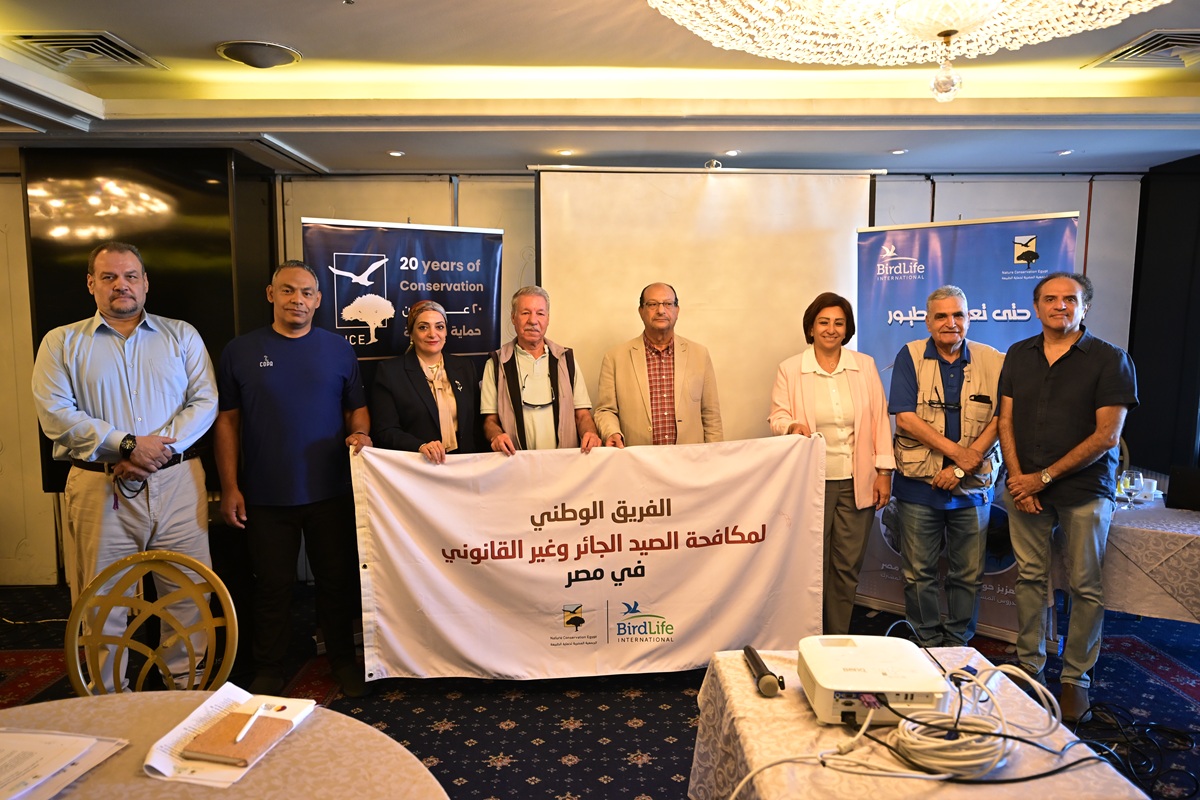
Within the framework of ongoing efforts to strengthen dialogue and coordination among stakeholders concerned with bird hunting in Egypt, the inaugural meeting of the National Task Force for Combating Illegal and Unlawful Bird Hunting was convened in Alexandria on 17 September 2026, followed by a field visit to the Burullus area in Kafr El‑Sheikh Governorate on the following day.
The two-day programme combined two complementary tracks: the first centred on building the institutional and organizational framework of the National Working Group, while the second focused on going into the field to engage directly with the realities, practices, and challenges of bird hunting.
The meeting brought together representatives of key stakeholder institutions to discuss the Working Group's terms of reference, define its organizational structure, and review the National Roadmap (2026–2030), alongside a range of proposals addressing the environmental, social, economic, and regulatory dimensions of hunting. The field visit that followed offered participants a direct look at hunting activity in Burullus — visiting hunting sites, observing practices firsthand, engaging in dialogue with hunters, and gaining insight into part of the bird trade chain through a meeting with a local trader.
 |
 |
Objectives of the Meeting and Field Visit
The two‑day programme primarily aimed to:
Day One — The Founding Meeting, Alexandria, 17 September 2026
Election of Leadership and Formation of Sub‑Committees
As part of completing the organizational steps of the inaugural meeting, the meeting witnessed the election of the executive leadership of the National Task Force, along with the selection of chairs and coordinators of the specialized sub‑committees, ensuring the distribution of roles and responsibilities across the main thematic areas underpinning the Task Force's work in the coming phase.
The elections resulted in the selection of Eng. Wahid Salama as Executive Chair of the National Task Force, alongside the formation of specialized sub‑committees and the selection of their coordinators as follows:
The formation of these committees represents a fundamental organizational step towards initiating the systematic work of the National Task Force, by distributing work streams across specialized thematic areas, while maintaining coordination and integration among the committees under the umbrella of the National Task Force.
Membership Framework
The organizational discussion extended to the future membership structure of the Task Force, including joining procedures, the nature of membership, mechanisms for its continuation, and cases related to membership or its termination.
At the conclusion of this discussion, it was agreed that participants attending the inaugural meeting would be considered founding members of the Task Force.
Reviewing the National Roadmap (2026–2030)
Following the organizational discussions, the meeting turned to substantive matters with a presentation of the National Roadmap (2026–2030), which sets out a framework of proposed pathways and interventions to address illegal and unsustainable bird hunting — spanning awareness, financing, regulation, scientific research, and the economic and social dimensions of the issue, beyond its immediate environmental scope.
The Roadmap outlines five core pathways:
Key Observations and Recommendations on the Roadmap
The discussion of the Roadmap witnessed broad engagement from participants, with contributions not limited to commenting on the proposed pathways but also addressing aspects related to how to reach target communities, understanding hunting motivations, and identifying appropriate interventions for each community according to its specific conditions. The following are the most prominent points raised during the discussion:
On awareness and concepts, participants proposed developing child-focused awareness content, unifying environmental terminology in a dedicated booklet, and establishing a platform for the Working Group to share updates and achievements.
On broadening the Roadmap's scope, suggestions included incorporating invasive species management and giving greater attention to the challenges faced by hunters themselves.
On local specificity, participants stressed that coastal communities are far from homogeneous in their dependence on hunting or their social and economic conditions — underscoring the need for a more nuanced understanding of target communities before designing any future intervention.
On community participation and local leadership, discussion emphasised that local communities should be partners in designing and implementing solutions, not merely recipients of messaging — highlighting the importance of engaging grassroots leaders and reinforcing messages that encourage community and family-level responsibility.
On incentives and behavioural change, participants noted that direct awareness tools alone are not sufficient, and discussed the role that incentives can play in supporting behavioural change.
A Proposed Voluntary Pledge to Reduce Illegal Bird Hunting
At the conclusion of the first day, a proposal was presented for a voluntary pledge as one of the proposed interventions to reduce the illegal hunting of migratory birds, by leveraging religious and community values and enhancing voluntary participation of local communities.
The presentation included a number of main axes, including:
Participants agreed to task the Working Group Chair with forming a committee of elected sub-committee coordinators to finalise the proposal and define the scope of the field intervention — including the target governorate and the groups the intervention will engage — as well as implementation and follow-up mechanisms. Participants also stressed the importance of moving quickly on the proposal, with implementation targeted within six weeks to two months of the meeting.
Day Two — Field Visit to Burullus
The second day placed several of these discussions in their direct field context, as participants travelled to Burullus in Kafr El-Sheikh governorate for a programme of site visits and community dialogue — including inspecting net sites and hunting areas, observing hunting practices firsthand, meeting with hunters and the local community, and documenting field practices.
Hunting Sites and Practices
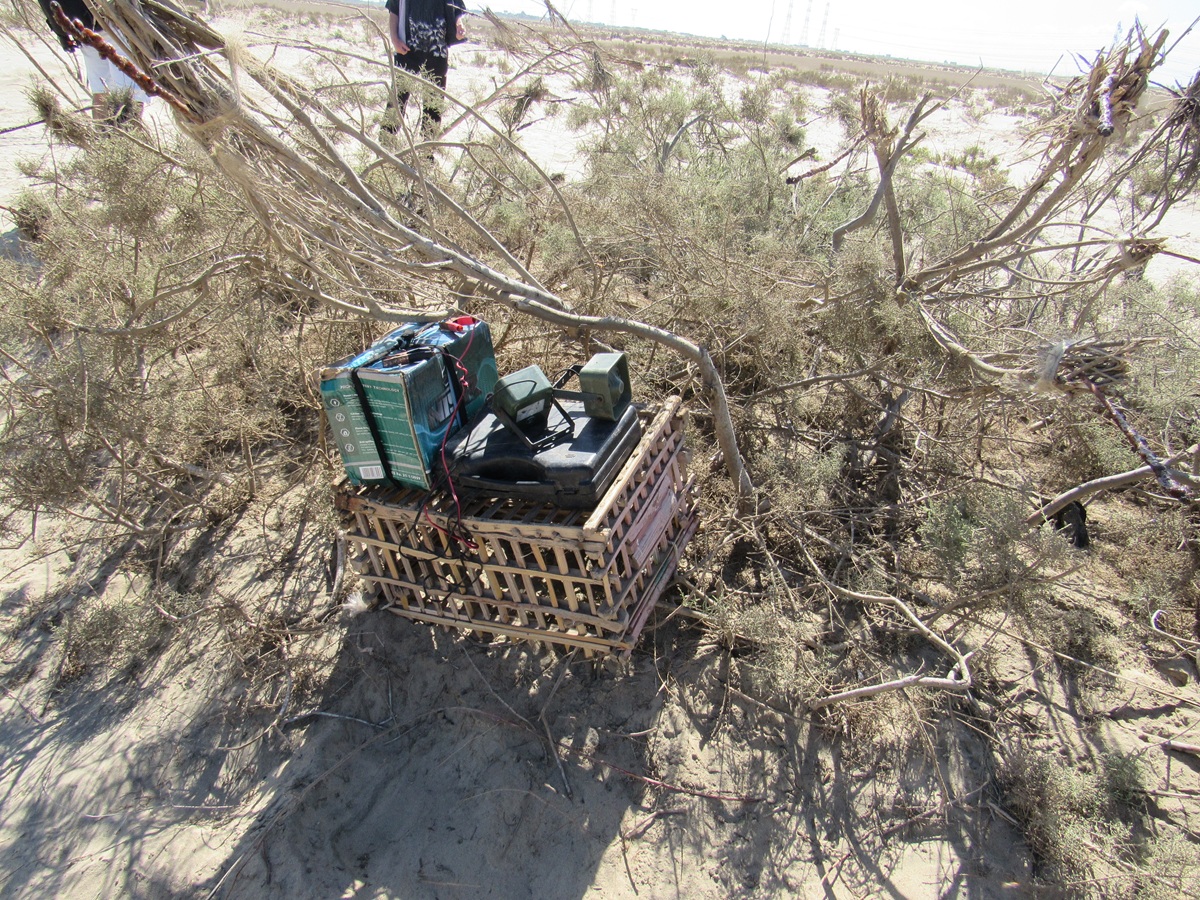
The visit included one of the mist-net sites, where participants observed a range of illegal hunting practices firsthand — including nets extending along the coastline in successive layers, making it nearly impossible for birds to pass through, in addition to areas of reeds surrounded by intensive bird call devices used to draw birds into what participants described as a "garden of death" — vegetation that appears inviting to birds but functions, in reality, as a highly effective trap.
Birds Captured and Released
During the visit, participants observed a number of birds held within the nets. Some were rescued on site, and participants also purchased and released a number of birds caught by hunters back into the wild. Beyond this hands-on rescue effort, the activity created an opportunity for direct dialogue with hunters about hunting conditions and the motivations behind it.
Dialogue with Hunters
Participants held direct discussions with a number of hunters about the conditions and motivations underlying their hunting activity, with economic circumstances emerging as one of the recurring factors cited. This dialogue offered insight into the social and economic realities tied to hunting — directly echoing Day One's discussions on the need to examine the economic and social dimensions of hunting rather than approaching the issue solely from an environmental lens.
Visiting a Trader and Understanding the Bird Trade Chain
This visit offered insight into part of the process by which birds caught in the area are collected and traded, including a preliminary account of the volume of birds reaching the trader, the hunting methods used, and the species in high demand. This dimension holds particular relevance to the roadmap’s focus on analyzing and disrupting supply chains, as understanding the relationships between hunters, traders, and consumers offers a way into understanding the movement and demand for hunted birds.
Discussion also touched on the use of bird calling devices, which — according to the trader — were unfamiliar in the area when first introduced, having come from abroad before spreading widely once their effect on increasing catch volumes was observed, reportedly by a factor of four to five. According to this account, the use of these devices is now widespread among hunters in the region.
Observations on Declining Bird Numbers and Shifting Trade Patterns
Discussions with the trader revealed a further dimension of the hunting landscape: a gap between the widely held belief among some hunters that birds are an inexhaustible resource, and the trader's own observations of declining numbers reaching him each season compared to previous years.
According to his account, this decline is driven mainly by a significant rise in the number of hunters in the area, alongside a shift in trading patterns, with a growing number of hunters now dealing directly with the public rather than relying on intermediary traders. The role of social media in amplifying hunting-related content was also raised, with growing interest in this type of content contributing to its wider visibility and spread.
Regarding demand from outside Egypt the trader indicated the existence of external demand for birds such as ducks, turtle doves, and quail, alongside penalties restricting the export of other species, particularly passerines, which drives some traders toward smuggling.
Key Findings and Preliminary Observations from the Field Visit
The field visit allowed the discussion to move from a general level to one more closely grounded in local realities, surfacing a number of observations that can serve as a basis for further study and discussion within the Working Group:
Bridging Institutional Work and Field Realities
The two days underscored the importance of combining institutional and field-level approaches in addressing illegal and unsustainable bird hunting. While the founding meeting focused on building the Working Group's organisational framework, defining its roles and membership mechanisms, and reviewing the National Roadmap, the field visit offered a direct look at the realities these efforts are ultimately designed to address.
The visit also demonstrated that developing future interventions requires a more detailed understanding of the environmental, economic, and social factors shaping hunting behaviour, alongside an understanding of the relationships between hunters, traders, and consumers, and the shifts underway in hunting and trading patterns. The data and observations gathered during the visit can serve as a foundation for further research and analysis, helping to shape interventions more closely aligned with the realities and needs of local communities.
Priorities for the Period Ahead
Building on the discussions held during the meeting and field visit, several priorities emerged for the next phase, including:
Stay updated with the latest news, trends, and offers by subscribing to our newsletter. Don't miss out on exclusive content and special promotions - sign up today!

.png)
